
Search and Rescue (SAR) training had two major divisions: training for SAR personnel, and training for those who would be out on the trails. The second focused on how to avoid getting lost — and, if lost, how to make yourself “findable.” One of those programs was aimed at youth. Called Hug-A-Tree, it continues to be a very good program for teaching kids how not to make a bad situation worse.
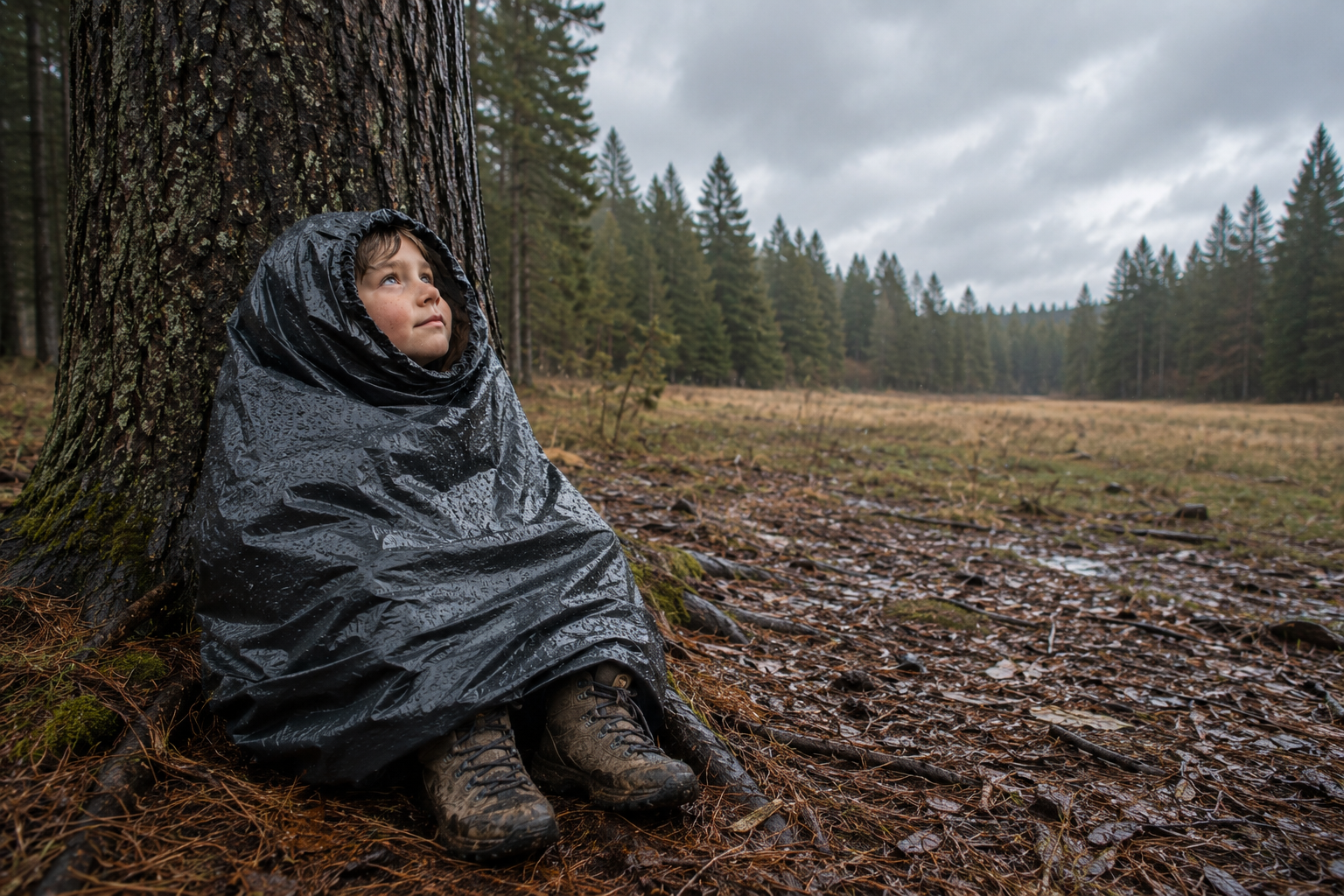
For wilderness outings, youths were instructed to carry a minimum of two things: a large black plastic trash bag and a whistle. Once they realized they had lost the trail, they were to find a large object and sit down next to it. If it was cold or started to rain, they were to pull the trash bag over their heads and rip a small hole for their faces. The bag traps heat and repels rain.
Continuing to wander, often in circles, makes the task of finding someone much more difficult. Sit down, save your energy, protect yourself from the elements, and call out or whistle whenever you hear someone approaching. Sitting at the edge of a large opening is ideal in case of airborne rescue efforts.
What does this have to do with the Christian life?
Over the past decade, I have continued to mature in my faith. Within the last year, I discovered the concept of Christian mysticism. Not knowing what it was, I started to read. First was St. John of the Cross. Next came his contemporary St. Teresa of Avila. I’ve since read Thomas Merton, John Climacus (St. John of the Ladder), The Cloud of Unknowing (by an anonymous author), and various other works.
What I found surprised me. I recognized my own experiences in some of what St. John of the Cross described, and in a few of the things St. Teresa described. That recognition didn’t come right away. The first free online version of St. John’s Dark Night of the Soul I found was a 19th-century translation of 16th-century Spanish into English. The sentence structure and grammar were very difficult to follow. I eventually found a more recent translation that was far more helpful.
I tend to read in spurts. I typically have a half-dozen books on my Goodreads “Currently Reading” list. With St. John’s Dark Night, I would read until I found a witness to something I had experienced, and then stop reading. I thought I was being lazy. In fact, it allowed me to experience a number of things before reading about them, which gave me greater clarity than the reverse would have. Had I read about an experience first and then had it, I would always have wondered whether my brain had simply “created” it. As I read other writers, I would sometimes find language and practices inconsistent with my walk.
The challenge was amplified by my lack of institutional practice. Most Christian mystics come from the Catholic or Orthodox traditions. I was neither. In fact, I didn’t really have a home in any tradition, nor did I have the structured patterns of the monastic life.
Despite the differences, I found great comfort in the writings of St. John. I treated them as my guide. At each step of the way, I would return to test whether I was still on the path he described or had wandered off the trail.
A few weeks back, I realized there was another risk I had not considered. St. John’s trail ran cold. It ended in a place I could not be. It settled into a new way of living with God that I did not have access to: the monastic life of a 16th-century Discalced Carmelite. I found myself without a guide. Without direction. I was lost. (That’s painful for a SAR member to admit — we always joked that we never got lost, we just ended up somewhere other than where we meant to be.)
After a few days of fretting, I realized I just needed to stop making decisions (stop moving), sit down and cover myself with protection (Holy Scripture), and lean against a big tree (the rock of Jesus’ church). My prayers were my whistle, as challenging as it was to find my voice in that moment.
I also started reading another St. John at this point: St. John Climacus. His work The Ladder of Divine Ascent takes a very different approach to the same territory St. John of the Cross described. At first I was discouraged by his focus on the monastic lifestyle — understandable, since the work was written for new monks. It predates The Dark Night of the Soul by nearly a millennium, and he writes from an Orthodox perspective. I’d heard of The Ladder of Divine Ascent, and it was on my “To Read” list — but a ways down.
In the midst of feeling abandoned by St. John of the Cross, I sought a meeting with someone who might be able to point me toward a spiritual director from this century — perhaps one who was still alive and could speak with me, not just share his or her writings.
I asked AI to recommend an Orthodox church in my area to start my search. Based on the criteria I provided, it suggested St. John of the Ladder Orthodox Church. I arranged an appointment. I decided the visit was a good excuse to add another book to my currently-reading list, and started in. I was about halfway through the book when I had my meeting. It was a pleasant conversation with a very capable and giving priest, but it did not answer the questions I had brought. It did not put me back on the trail I had been on.
The rescue came in a later chapter of The Ladder. A paragraph in Step 25 clarified what I had been experiencing recently. It didn’t set me back on the old path. It did not yet point me toward a new one, although the hints are there. It was like a call from a rescuer still in the distance — 1,500 years in the distance, to be precise.
So I am up, walking slowly from the tree toward the voice. Testing the direction. Making sure the voice is meant for me. I’m not out of the woods yet, but there is hope. And it turns out the instructions we drilled into those kids are the same ones I needed myself.
When you step off the trail and discover you are lost, trust the training. Remain still, cover yourself, and lean against something sturdy. Listen for the voice in the distance. Respond by calling out. And when the voice comes, move toward it carefully. There’s no time for pride to get in the way. Allow yourself to be rescued. Live to hike another day.
The route God took to deliver that paragraph in The Ladder — through a humbling, a particular church, and a meeting that answered nothing I asked — is a story of its own, for another time.
Search all posts
This Post
Other Posts
aka: When the Trail Runs Cold


Related Posts
-
aka: When the Trail Runs Cold
Given I operate a non-profit Christian community and other entities, I feel compelled to offer this disclaimer: The opinions expressed on the BFAdams.blog site are my personal opinions. My posts about secular issues are not reflective of the position or leadership of any entity I may be involved with.
And Jesus said to them, “Render to Caesar the things that are Caesar’s, and to God the things that are God’s.” And they were amazed at Him. – Mark 12:17